
Settle in with a cuppa coffee cause this is a long and juicy one 🙂
I’ve traveled to nearly 60 countries at this point, and if there’s one thing that trend line has taught me, it’s this: the scarier a place sounds before you go, the more likely you are to get there and feel like an idiot for believing the hype.
Not always. Some places really are as complicated as advertised, and I’m not in the business of pretending otherwise. But three countries in particular rearranged the furniture in my brain, and I think about them constantly — especially now, building an app whose entire job is to help people separate the real risk from the recycled rumor.
Saudi Arabia: Not the Country I Was Warned About
Before I went, the warnings were loud and specific: they hate Americans. Women have no rights. They can’t work or go in public without their husband or father.
Unfortunately (or fortunately depending how you look at it!) I don’t listen to what other people say and instead experience it for myself and then form my own opinions.
What I actually got was some of the warmest hospitality of my entire traveling life. Strangers went out of their way to make sure I was fed, welcomed, and never once made to feel like an outsider for being American. That’s not a small thing to say about a country that gets flattened into a punchline in most Western conversations.
Now — I’m not going to stand here and tell you Saudi Arabia is some feminist utopia, because that’s not true and it would be insulting to the women actually living under a legal system that still hands real power to male guardians. The guardianship system has been dramatically rolled back over the past several years — women can drive now, travel more freely, work in more industries, hold more government positions than at almost any point in the country’s modern history — but it hasn’t been dismantled. A woman still needs a guardian’s consent to marry. Custody defaults still favor fathers. Rights that exist on paper don’t always survive contact with a conservative rural town.
Here’s the part that actually reshaped my brain, though: a country’s laws and a country’s people are not the same thing, and we collapse them together constantly. I met a nation of people who were curious about me, generous with me, and completely uninterested in the geopolitical narrative I’d been handed before I landed. Holding “the legal system has real, documented restrictions on women” and “the individual humans I met were overwhelmingly warm and welcoming” in the same head, at the same time, without flattening one into the other — that’s the actual skill travel teaches you. Nuance. Not “it’s fine” or “it’s terrible.” Both things, at once, are true.
Benin: Voodoo Isn’t What Hollywood Sold You
Say the word “voodoo” to most Americans and you’ll get dolls with pins in them, zombie movies, and a vague sense of menace — a religion turned into a horror-movie prop.
Here’s what they don’t tell you: Vodun is Benin’s actual national religion, practiced by millions of people, with roots going back centuries among the Fon and Ewe peoples of the old Kingdom of Dahomey. The word itself just means “spirit.” It’s a belief system built around ancestor reverence, healing, and a relationship between the visible and invisible world — not curses and pin dolls.
And here’s the part that made my stomach drop a little: the reason “voodoo” sounds sinister to Western ears at all is directly tied to the slave trade. When enslaved people were taken from the Bight of Benin to Haiti, they carried Vodun with them, and it blended with the Catholicism forced on them by enslavers into what became Haitian Vodou. European and American culture spent the next few centuries turning that surviving, syncretized faith — one of the only things enslaved people were able to keep — into a racist caricature. The “scary voodoo” stereotype isn’t some neutral cultural artifact. It’s slavery-era propaganda with a very long shelf life, and most people repeating it have no idea that’s where it came from.
Standing in Benin, watching a religion be practiced with the same seriousness and reverence as any faith I grew up around, I couldn’t stop thinking about how much of what we call “creepy” is really just “unfamiliar, filtered through someone else’s racism.”
India: The “Rape Capital” Headline Doesn’t Hold Up the Way You Think
This is the one people push back on the hardest, so let me be careful here, because the last thing I want to do is wave away something that’s genuinely serious.
Sexual violence in India is real. Underreporting is a massive, documented problem, and there are real, structural failures in how cases get handled. I’m not going to pretend otherwise, and neither should you.
But “rape capital of the world” isn’t a statistic — it’s a headline that stuck after the horrific 2012 Delhi bus case, and it never really left, even though the actual reported numbers don’t back up the label. India’s reported rape rate per capita is lower than that of many Western countries, including the US. That doesn’t mean India is “safer” in some tidy, provable sense — underreporting cuts both ways, everywhere, and comparing crime stats across wildly different countries and reporting cultures is genuinely messy. What it does mean is that “rape capital of the world” is doing a lot more narrative work than statistical work. It’s a phrase that made a country of 1.4 billion people synonymous with a single crime, in a way we simply don’t do to countries with statistically worse numbers.
I was in India in 2024, and just weeks before I arrived, there was another brutal attack. A Spanish couple traveling through India on motorcycle.
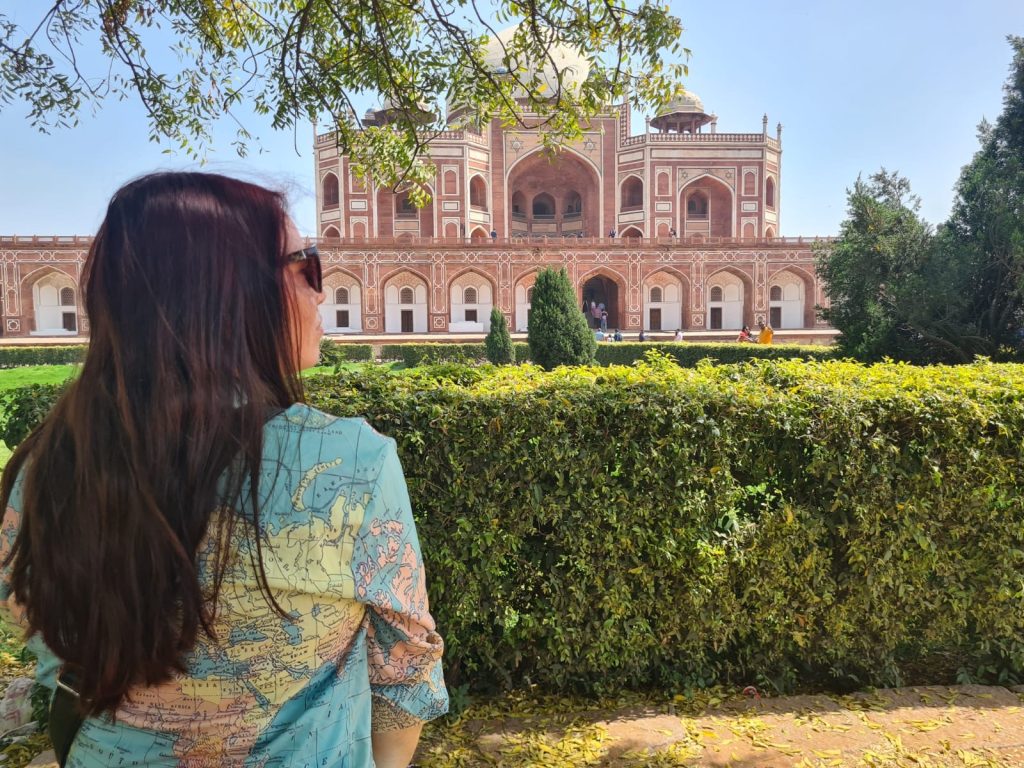
I traveled through India as a solo woman and was met with curiosity, generosity, and people rearranging their day to make sure I got where I was going safely. That doesn’t erase the real problem. It just means the real problem and the tourist-brochure horror story are two different things, and only one of them was built to go viral.
I’m not going to lie though, India is as far out of your comfort zone as you can get. I have (unfortunately) never seen poverty quite like this before. The images of a small child, barefoot and clothes covered in dirt begging for money as I exited the train station in Mumbai will stick with me forever.
This is a country that you need to have an open mind and be prepared for.
I’m not going to sit here and pretend like India is on the safest countries in the world list. Because it’s not. India is not a country you can just go to on a whim. It requires planning.
India is not a two week “vacation destination”. It is an experience. Every part of the country is vastly different. From the chaotic and loud Delhi streets to the spiritual capital of world in Varanasi to the beaches in South India, the back waters of Karala to the blue city of Jodhpur.
And you know what I just realized right now as I was typing this? India deserves its own blog post because I cannot accurately portray this diverse country in a way that’s authentic and real. Stay tuned!
The Actual Lesson
I’m not saying “everywhere is secretly fine, just go with an open mind” — that’s a naive sentence and I’d be lying if I said it. Some fears are earned. Some warnings exist for good reason. Part of my entire job, building Borderly, is taking real risk seriously instead of hand-waving it away.
But I’ve now stood in three countries that Western media had convinced me to fear for three completely different reasons — geopolitics, religion, and crime statistics — and in every single case, the gap between the story and the reality was enormous. Not because the story was pure fiction. Because the story was a caricature: one true fact, stretched over an entire nation of people, until nuance died and a stereotype was born.
That’s the whole game, really. Not “trust everyone, everywhere, blindly.” Just: do your actual homework, and stop letting a headline from a place that’s never been there do your thinking for you.
Leave a Reply